

When I think of LEGO, I think of the cool cars, and the Star Wars Spaceships I can build and display. But LEGO has long been more than just a toy; LEGO is a tool for creativity, problem-solving, and hands-on learning. When it comes to STEM (Science, Technology, Engineering, and Mathematics) education, LEGO provides an engaging way to teach fundamental concepts while sparking curiosity and innovation. By building, experimenting, and modifying the cars that LEGO have, students learn critical STEM skills in a fun and interactive environment.
What is STEM Education?

Before we look at how LEGO and STEM work together, I think its good that I first tell you a bit about STEM and what it is. STEM education focuses on teaching students the core principles of science, technology, engineering, and mathematics. It emphasizes hands-on learning, real-world problem-solving, and interdisciplinary approaches to grow and develop critical thinking and innovation. STEM prepares students for future careers in technology-driven fields and equips them with skills like teamwork, adaptability, and creativity.
How LEGO Cars Enhance STEM Education
1. Hands-On Learning Through Building

LEGO cars allow students to physically construct model cars, giving them a tangible understanding of engineering principles. They learn how pieces connect, how structures gain strength, and how design choices impact functionality. The Technic sets really dive deep into teaching internal parts of how cars and engines work.
Skills Developed:
- Mechanical Engineering: Students understand how wheels, axles, and gears work together.
- Problem-Solving: When their design doesn’t work as intended, they adjust and try again.
- Creativity: Building from scratch encourages unique solutions and out-of-the-box thinking.
2. Teaching Physics with Motion
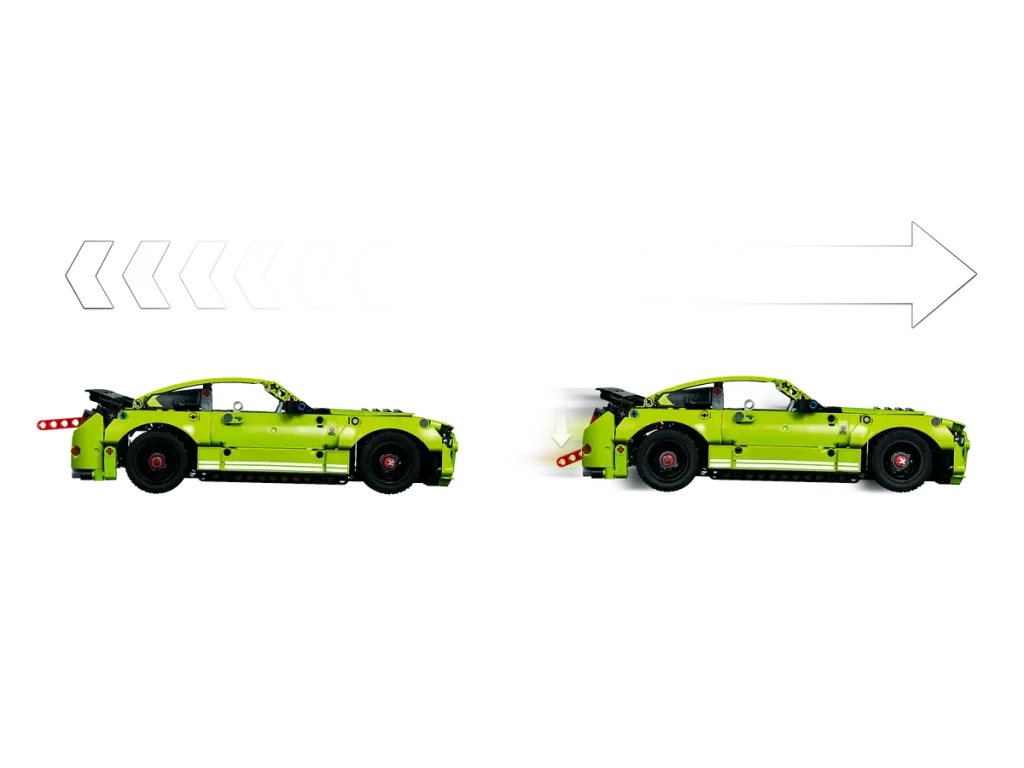
Building and racing LEGO cars introduces students to basic physics concepts such as force, motion, and energy. By experimenting with different designs, students can observe how variables like weight, friction, and aerodynamics affect speed and performance. With the addition of the LEGO Pull-Back mechanism, young builders and really test their creativity and see how different aspects such as weight and design, determine speed or mobility.
Key Concepts:
- Newton’s Laws of Motion: Students see how force and mass influence acceleration.
- Friction and Traction: Exploring different wheels and surfaces helps students understand resistance.
- Energy Transfer: Adding LEGO Power Functions or rubber bands shows how energy translates into motion.
3. Incorporating Technology with LEGO Technic

LEGO Technic sets take STEM learning to the next level by introducing mechanical and electronic components. Students can build advanced models with working gearboxes, suspensions, and even motorized functions. By using LEGO’s Control+ system, they can program and control their cars via a smartphone app, adding a layer of technology integration.
Benefits:
- Coding and Programming: LEGO Control+ encourages basic programming skills.
- Robotics: Students can create self-driving cars and learn about automation.
- Real-World Engineering: Technic sets simulate real car mechanics like gear ratios and drivetrain systems.
4. Fostering Collaboration and Teamwork

LEGO cars are often used in group projects or classroom activities, encouraging students to work together. Whether they’re designing a race car or solving a specific challenge, collaboration teaches them how to communicate, share ideas, and combine skills effectively.
The Benefits of LEGO in STEM Education
- Interactive Learning: Students engage with STEM concepts through hands-on activities rather than passive lectures.
- Accessible to All Ages: From basic LEGO car builds for younger students to advanced Technic models for older learners, LEGO caters to all skill levels.
- Encourages Curiosity: The open-ended nature of LEGO allows students to experiment and explore freely.
- Develops Resilience: When projects fail, students learn to adapt and try again, building persistence.
- Bridges the Gender Gap: LEGO’s appeal across genders makes it a great tool for fostering inclusivity in STEM education.
Examples of STEM Activities with LEGO Cars
- Gravity-Powered Cars: Build cars that roll down a ramp and explore how weight and wheel size affect speed.
- Rubber Band-Powered Racers: Create cars powered by rubber bands to learn about stored energy and propulsion.
- Obstacle Navigation: Design a car that can climb over or navigate around obstacles to teach problem-solving.
- Motorized Builds: Use LEGO motors to create cars with functional steering or adjustable speed.
- Coding Challenges: Program a LEGO Technic car using LEGO’s Control+ or Mindstorms platforms to follow a specific path.
LEGO Cars in the Classroom
Educators worldwide use LEGO cars to bring STEM lessons to life. They create projects that challenge students to:
- Design and build cars that meet specific requirements.
- Compete in races to optimize speed and efficiency.
- Solve real-world problems like creating a sustainable vehicle.
These activities not only teach STEM principles but also foster a love of learning and innovation.
Conclusion: LEGO Cars as a Gateway to STEM
LEGO cars offer an exciting and accessible way to introduce students to STEM education. They combine the joy of building with real-world concepts in physics, engineering, and technology. Whether in a classroom or at home, LEGO cars provide endless opportunities for creativity, problem-solving, and collaboration.
Ready to drive your STEM education forward? Grab some LEGO bricks and start building your own car today!